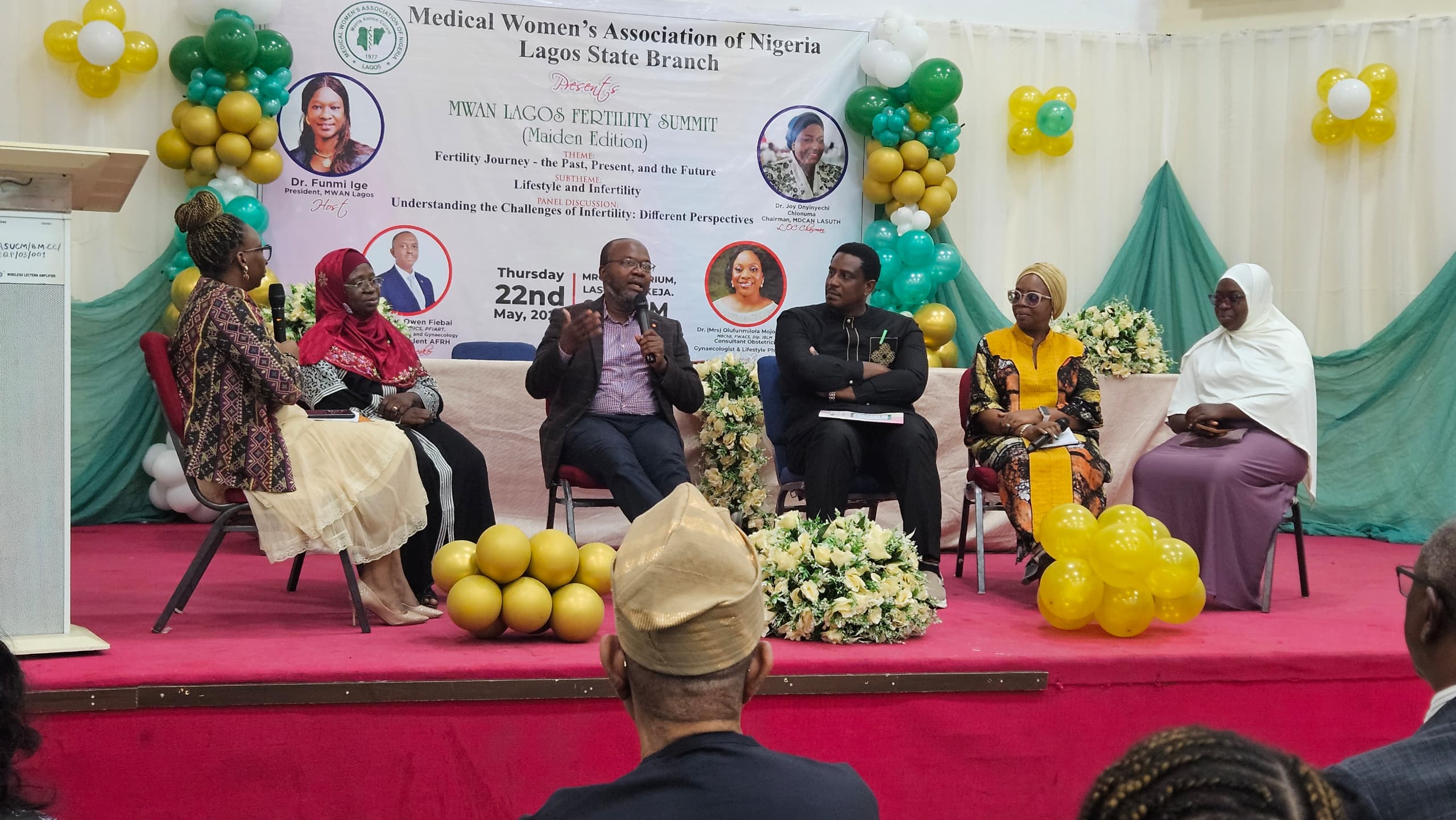
The conversation around fertility in Nigeria took a decisive step forward on Thursday, 22nd May 2025, as the Medical Women’s Association of Nigeria (MWAN) Lagos – led by Dr Funmi Ige (President, 2023-2025 Biennium) – hosted the maiden edition of its Fertility Summit at the MRC Auditorium, Lagos State University Teaching Hospital (LASUTH), Ikeja.
With over 220 participants – 181 onsite and 40 joining virtually – the summit brought together a rare mix of medical professionals, fertility experts, expectant parents, health facilities, researchers, community advocates and financial partners. The goal was clear: to map a practical, evidence‑driven route from knowledge to accessible, dignified fertility care for Nigerians.

Anchored on the theme “Fertility Journey – The Past, Present & The Future,” the event delivered a rich blend of scientific insight, policy direction, lived experience and operational models that could reshape fertility care across the country.
Across keynote lectures, panel discussions and technical sessions, speakers unpacked Nigeria’s shifting fertility landscape, the science shaping modern reproductive care, and the operational and financial models needed to make fertility services accessible, ethical and patient‑centred.
Understanding Fertility in Nigeria: A Changing Landscape
The keynote address, delivered by Prof. Preye Fiebai – a leading voice from the Association for Fertility and Reproductive Health (AFRH), set the tone for the day.
“Fertility is not just about gametes—it is social as well as biological.”
He traced Nigeria’s demographic evolution from historically high fertility rates shaped by cultural norms to today’s complex transition where fertility is declining but infertility is rising as a clinical and social priority. Today, delayed childbearing, lifestyle changes, metabolic disease, and improved diagnostics are driving demand for fertility services.

Prof. Fiebai stressed the need to integrate fertility into Universal Health Coverage (UHC) and national health planning, supported by digital tools, registries, and equitable Assisted Reproductive Technology (ART) access.
Lifestyle Medicine: Prevention as Fertility Care
Dr. (Mrs) Olufunmilola Mojoyinola – consultant obstetrician & gynaecologist and lifestyle physician – reframed lifestyle as “first‑line fertility medicine.” She presented evidence showing that diet, exercise, sleep and environmental exposures directly influence ovulation, sperm quality, ART outcomes and overall reproductive health. Key takeaways from her session included:
- Diets high in saturated fats and high‑glycaemic foods may worsen reproductive outcomes.
- Plant‑predominant diets rich in antioxidants improve fertility metrics.
- Moderate exercise enhances fertility, while “excessive” aerobic activity may impair ovulation in some women.
- Sleep disruption, deprivation, and endocrine‑disrupting chemicals (BPA, phthalates, parabens, PFAS) negatively affect reproductive function.
Her message was simple but powerful: “Lifestyle medicine as prevention shortens the fertility journey”.

Fertility Preservation: Expanding Options, Protecting Autonomy
Dr. Kunle Ajayi of Clearview Hospital highlighted that fertility preservation is no longer niche, but now mainstream medicine relevant to oncology, ageing, primary ovarian insufficiency and gender‑affirming care. He discussed embryo and oocyte cryopreservation, ovarian tissue cryopreservation and transplant, GnRH agonists and ovarian transposition, sperm cryopreservation and surgical retrieval techniques as options available. Also, emphasised the need for timely referral, especially before gonadotoxic therapy, and the ethical importance of clear consent, governance and patient autonomy.
Laboratory Quality and Scalable ART Models
Bridge Clinic Fertility Centre presented a practical blueprint for safe, scalable ART delivery, showcasing: An ISO‑style Quality Management System (QMS), double‑witness traceability and stringent cryobank governance, an audited ~40% pregnancy rate for gold‑standard clients with 3,270 documented live births by March 2025. Highlighting their transport‑IVF model, where partner clinics handle retrievals while central labs manage fertilisation and culture, can reduce cycle costs by up to 30% while maintaining quality and expanding access.

Financing Fertility: Making Care Affordable
A representative from Access Bank Plc highlighted innovative financing options designed to reduce catastrophic out‑of‑pocket spending for women and couples seeking IVF and other fertility treatments. These include microloans, tailored fertility funding packages and structured repayment plans. Sending the clear message that –
Fertility care must not remain a privilege for the few, but accessible for as many Nigerians as possible.
Regulation, Registries and Patient Protection
During this ground-breaking summit, delegates called for a national ART registry aligned with ICMART, SART and ANARA; mandatory outcome reporting; licensing and accreditation for fertility labs; ethical frameworks for gamete donation and surrogacy; stronger patient‑rights protections. These systems were agreed as essential to build public trust and ensure safe, ethical practice.

The Human Side: Counselling, Stigma and Lived Experience
Counselling was repeatedly described as non‑negotiable – from pre‑treatment cost discussions to psychosocial support and post‑treatment follow‑up. Patient and expert speakers urged deeper community engagement, including men, religious leaders and influencers, to reduce stigma and normalise conversations around infertility.
Special Interventions and Notable Voices: A Call for Early Screening and Fertility Plan
One of the most striking interventions came from Dr. Kemi Ailoje – IVF/Fertility specialist and reproductive endocrinologist, who called for baseline fertility investigations for female medical students and the opportunity for them to use that as a benchmark for planning their fertility journey. She noted that long years of training, chronic stress, delayed childbearing and demanding career paths often expose young doctors to fertility risks that go unnoticed until it is too late.

Her appeal resonated strongly across the hall, sparking conversations about institutional responsibility and early reproductive health education. Other distinguished guests included Prof. Adetokunbo O. Fabamwo – Chief Medical Director (CMD), LASUTH, Dr Abosede Lewu – CMD ORB Women’s Clinic, Prof Rosemary Ogu – MWAN National President (2023-2025 Biennium) and many more.
From Summit to System Change: A Roadmap for the Future
The MWAN Lagos Fertility Summit demonstrated that Nigeria has the expertise, innovation and will to build an equitable fertility ecosystem. What is needed now is political commitment, financing pilots, registry infrastructure and patient‑centred governance.
As MWAN Lagos affirmed in its call to action: “Fertility care must become a pillar of reproductive health for everyone who needs it”. Conclusively, MWAN Lagos, AFRH and other medical professional bodies in attendance proposed a five‑point practical roadmap for the Nigeria’s fertility ecosystem:
- Make prevention routine in primary care
- Standardise fertility preservation pathways
- Scale ART ethically through shared‑lab and transport‑IVF models
- Finance and protect through subsidies, loans and regulation
- Centre the patient through counselling and lived‑experience‑driven care
In the closing remarks, Dr. Joy Chionuma, Chairman of the Local Organising Committee, expressed heartfelt appreciation to all guests, speakers, participants and sponsors for making the maiden edition a resounding success.

Acronyms:
- ANARA – African Network and Registry for Assisted Reproductive Technology
- BPA – Bisphenol A
- ICMART – International Committee Monitoring Assisted Reproductive Technologies
- ISO – International Organization for Standardization
- IVF – In vitro fertilisation
- PFAS – per- and polyfluoroalkyl substances (PFAS)
- SART – Society for Assisted Reproductive Technology
Editor’s note:
This article was collated by Dr Oluwakemisola Agoyi (virtual participant at the summit) and Deborah Ojo, based on presentations and panel contributions from the maiden MWAN Lagos Fertility Summit. Additional details and the complete event synopsis are available in the Summit’s brochure and 3rd Edition of the Amazon in Medicine Magazine published by MWAN Lagos, respectively.