
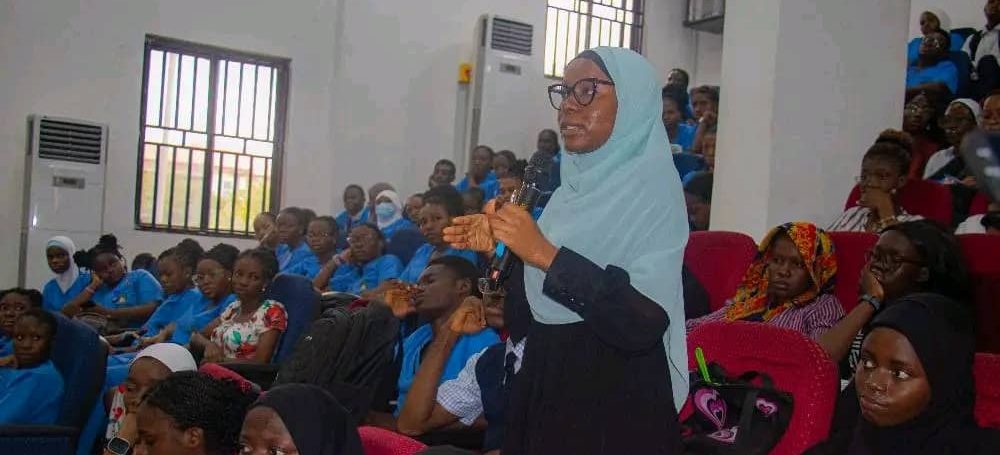
From induction hall to our interview spotlight!
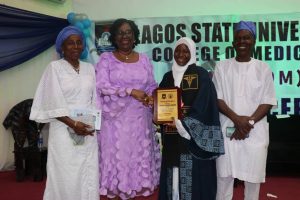
Following the induction of the 6th set of graduating nursing students from the Lagos State University College of Medicine (LASUCOM) into the nursing profession in November 2025, we interviewed the best graduating student of the set – Nurse Roqeebah Awode. During which she shared her journey through nursing school and tips for excelling in other areas – while getting an education.
MM: Congratulations on emerging as the Best Graduating Student in the Department of Nursing at LASUCOM. What does this achievement mean to you – considering the hectic demands of nursing school?
Nr Roqeebah Awode: Thank you so much. Personally, this achievement reaffirmed that perseverance and dedication truly lead to excellence, especially because of how intense the demands of nursing school are. It was deeply fulfilling to accomplish this milestone, and I am genuinely grateful to have emerged as the Best Graduating Student among such an amazing set of brilliant nurses.
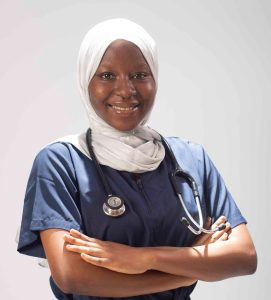
MM: What inspired your choice to becoming a Nurse?
Nr Roqeebah Awode: Nursing was my first choice in JAMB. Even before then, I knew I wanted to study a health-related course. Although many of my teachers and friends in secondary school expected me to pursue engineering because I excelled in core science subjects. To their surprise, I chose nursing. Interestingly, after resuming first semester in 100 level, I realised that nursing actually required knowledge from all those science subjects. So, it turned out to be a win-win for me.
MM: Nursing training is known to be intense. Can you walk us through what a typical day looked like for you during your most demanding academic periods?
Nr Roqeebah Awode: Yes, nursing training is extremely intense and time-consuming. And if one is not careful, it can completely take over one’s social life. During my most demanding academic periods, particularly this year – when I was combining lectures, research, assignments, clinical postings, in-courses, school exams, and professional exams – my days were quite hectic.
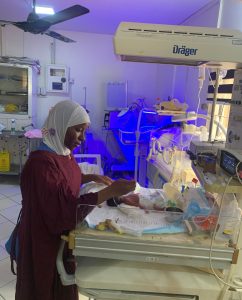
I’d usually plan my day the night before or very early in the morning after Fajr prayers. It might not always be a detailed to-do list, but I would take a moment to mentally map out my priorities for the day. After that, I clean up, have breakfast (which I consider very important), and try to accomplish something before morning lectures. Such as revising, completing an assignment, working on my research, or packing business orders. After lectures, which often end late in the afternoon, I return home to eat and rest briefly, then attend to chores before continuing academic work.
In the evenings, my roommates and I usually study together – practising past questions, clinical demonstrations, or preparing for professional exams, OSCEs, and in-courses. This often lasted one to two hours or more. Afterwards, I attend to any pending business orders and prepare them for delivery. If I still had energy, I would read a few pages of an e-document (PDF), a novel, or watch a short movie before going to bed.

MM: Quite detailed. You were actively involved in extracurricular activities while still excelling academically. How did you decide what activities to commit to and which ones to say “no” to?
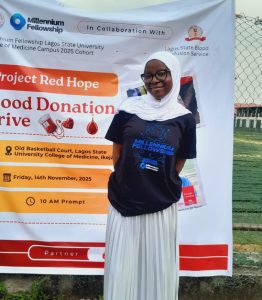
Nr Roqeebah Awode: I was involved in extracurricular activities from my 100 level, and even more during my time at LASUCOM. In secondary school, I once came across the quote, “Education is not preparation for life; education is life itself.” Reflecting on this made me realise that since we spend so many years in school, it is important to still live meaningfully while getting educated.
LASUCOM provided many opportunities for engagement, as there were always activities organised by student associations, religious bodies, or the institution itself. I mainly committed to activities that supported my personal and academic development, religious growth, social engagement, and entrepreneurship. I was intentional about choosing activities that aligned with my goals and values.
MM: Beyond school, you also ran a business. How did you manage the mental shift between academic responsibilities and entrepreneurship without burning out?
Nr Roqeebah Awode: I ran a business – Qeebs Skincare – from my 100 level throughout my time in school. Skincare initially began as a personal journey for me, I struggled with acne and dark spots, which led me to read skincare blogs and watch YouTube videos to better understand skin health. Along the way, I noticed that people with skin conditions are often spoken to unkindly, and I also met many individuals who did not know what products to use or avoid. This inspired me to build a community where people could feel confident in their skin, regardless of blemishes or concerns.
When I first started, I combined sharing basic knowledge about the human skin and skincare tips with product recommendations, sales, and encouraging individuals with certain skin conditions to consult dermatologists when necessary. Because skincare was something I was genuinely interested in, balancing my business with academics came naturally. I truly enjoyed my entrepreneurial journey in school, buying and selling, product photography, graphic design, and participating in trade fairs. It was exciting, I learned many valuable skills in the process, and I had opportunities to meet people and socialise, especially during trade fairs.

For me, running my business felt like a healthy break from academics. By being intentionafl about not allowing it to consume too much of my time, particularly during examination periods, I was able to maintain a good balance between both.
MM: Time management is something many students struggle with. What practical strategies helped you stay organised and on track throughout your training?
Nr Roqeebah Awode: Time management was indeed essential for me. The strategies I consistently used were prioritisation and planning ahead. This helped to regularly assess what I had accomplished during the day and what still needed to be done. I tried not to overload my daily schedule. On days when I completed all planned tasks early, I allowed myself to do more. On days when I couldn’t finish everything, I avoided being too hard on myself, knowing I had done my best.
MM: Were there moments when balancing school, extracurriculars, and your business felt overwhelming, and how did you navigate those moments?
Nr Roqeebah Awode: Definitely, there were such moments. During those times, I always prioritised my academics because that was my primary responsibility as a student. I adjusted my business and extracurricular activities to fit around my academic demands. During examination periods, especially, academics took absolute priority.
MM: Looking back, what role did discipline, support systems, or faith play in helping you maintain consistency and focus?
Nr Roqeebah Awode: These three factors were the foundation of my life in school. Discipline helped me stay consistent even on days when things felt difficult. I also had a strong support system – my parents, family, roommates, friends, seniors, lecturers, mentors, and clinical instructors all played important roles. Most importantly, my faith sustained me throughout my journey, from 100 level through my transition to LASUCOM and until graduation. After doing my best, I entrusted the rest to God, believing that since He brought me into the course and the school, He would see me through, and He did. I truly could not have done it alone.
MM: How did your experiences outside the classroom shape you as a nursing student and influence the kind of nurse you aspire to be?
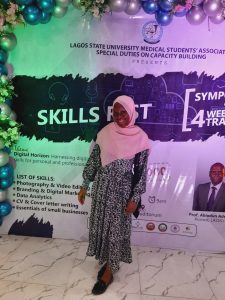
Nr Roqeebah Awode: My experiences outside the classroom gained from conferences, symposiums, summits, trade fairs, skill acquisitions, and Muslim camps, were enlightening and encouraging. Listening to experienced professionals across healthcare and other fields was always eye-opening and motivating. These experiences consistently inspired me to do better, not only as a nursing student, but also as an entrepreneur and a Muslim. They played a significant role in shaping the kind of nurse I aspire to be.
MM: What misconceptions do people often have about top graduating students, and what is your own reality behind the grades and accolades?
Nr Roqeebah Awode: One common misconception is that top students have everything figured out. That was not my reality. I didn’t have everything figured out; I simply took things one day at a time. My results were a product of discipline, resilience, support, mentorship, and most importantly, God’s help.
MM: For nursing students who want to excel academically but are also passionate about building skills outside school, what honest advice would you give them?
Nr Roqeebah Awode: My first advice is to believe that it is possible. You can excel academically while still building skills outside school, and you can do both excellently.
My honest advice would be:
– Always prioritise your academics and manage your time well.
– Narrow down your skill interests so you can focus intentionally.
– Build a strong support system and accountability structure.
– Know your limits, rest well, eat well, and take care of yourself.
– If you are a believer, hold firmly onto God.

MM: Thank you for your time and sharing your insights.
Nr Roqeebah Awode: Thank you for this amazing opportunity. It’s truly an honour, and I am very grateful for the platform.