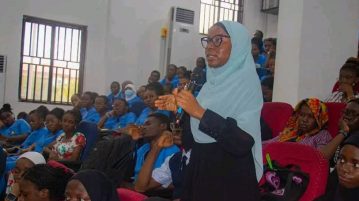
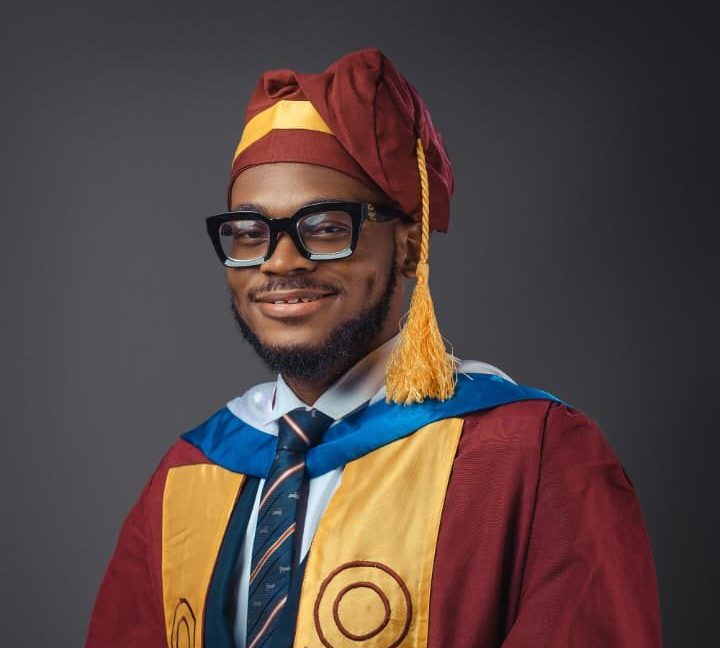
From induction hall to our interview spotlight!
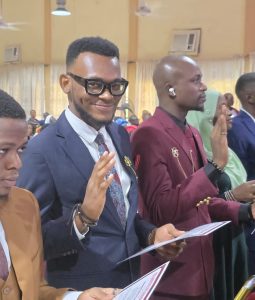
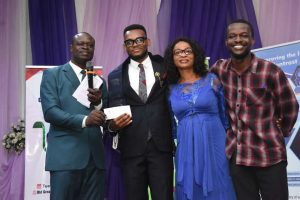
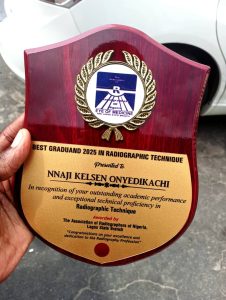
Following the induction of the 10th set of radiography students from the College of Medicine, University of Lagos (CMUL) into the radiography profession on the 22nd of July 2025, we interviewed one of the best graduating students of the set. During which he shared his insight as a student and experience as a professional.
Interviewer: Medical Mirror (MM) Correspondent, Mary O. A. Awoniyi
MM: Hello Sir! Could you introduce yourself and tell us how you were able to graduate as one of the best students from your department?
Hi, I’m Kelsen Nnaji, a graduate of Radiography from the University of Lagos. Truthfully, I wasn’t trying to be one of the best as undergraduate. I just worked towards getting a first class, because my academic journey didn’t start on a high note. In my first few semesters, my CGPA wasn’t up to 4.0, but in year 3, COVID happened. That period helped me to reflect and resolve to finish with a first class, because I knew I was capable of getting it done. So, I got a pen and did the maths – I drafted out the least required grades needed to achieve that goal and made sure to stick by it. From that moment in year 3, my CGPA went up till year 5, and I eventually emerged as the best student in “Other Imaging Modalities and Radiographic Technique”. Additionally, I was the joint best in the board professional examination. I’m thankful to God for everything, because there were numerous times when one mark could have made me miss out on my goal, but I was always right on track.
MM: Interesting. Can you share with us how you came about studying radiography and what the process is like to get a degree in radiography?
I actually never knew what radiography was as at the time I picked it. I had a low JAMB score on my second attempt and was scared I’d miss out on another admission year. Fortunately, I was advised by my private tutor back in secondary school to consider radiography. I had never heard of it before then. He told me UNILAG offered it at that time, as only about five or seven universities in Nigeria offered the course back in 2017. Immediately he told me, I googled it and saw a lot of fancy equipment. So, I picked it immediately.
MM: Radiology also sounds similar. Can you kindly clarify the difference between radiography and radiology? Highlighting the specialised roles, as well as the pros and cons of both areas?
Radiographers are healthcare professionals tasked with the responsibility of using various sophisticated imaging equipment – which use ionising and non-ionising radiation (as the case may be) – to accurately acquire images of the internal structures of the human body and animals (Yes, there is veterinary radiography). It is these images that a radiologist (who is a specialised medical doctor) works with to give a final diagnosis, based on what they see. The exception is in sonography, where the sonographer/radiographer reports their findings themselves.
So, radiographers and radiologists work together as a team with the end goal of doing the best for the patient.
As a radiographer, you have more patient interaction, it is more hands-on as you have to learn new techniques constantly alongside dexterity with machines. However, it is a very physically demanding job. You also get exposed to controlled amounts of radiation, but there are mechanisms in place to keep this exposure at a bare minimum. I am not a radiologist, but I know it can be very interesting if you are one drawn to visuals. Seeing various disease conditions presented to you can be very fascinating. It can also become very mentally daunting depending on the volume of work one has to complete. Accuracy in diagnosis is also very key because a wrong diagnosis can risk the life of a patient. Radiologists generally get paid higher as well.
MM: Back to your journey in school as a radiography student, what would you say was your greatest achievement or best experience while in school?
Leading the radiography student’s association of UNILAG was my greatest achievement as a radiography student, but being in final year and participating in the various activities that came with it were my best experiences. I had the best classmates, and they made final year really enjoyable.
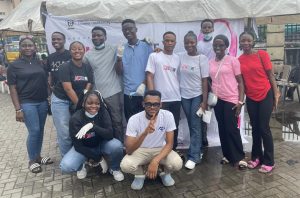
MM: Knowing you were active in your association and became the president in your final year as well, what inspired this decision and how were you able to balance this role with academics?
I think because I got involved in some form of school politics in second year, it became natural to keep getting involved throughout my undergraduate years. By my fourth year, I became vice president of the association and in final year, I went for president. I thought really hard before going for it though, because remember, I had a plan to finish with first class and the margin for error was slim. But I got encouraged by a few people to go for it and thankfully, it didn’t end in tears.
Balancing the role with academics was not easy at all. Most other presidents faced the same hurdle, but it is doable. It is all about having that resolve that no matter what comes up, your role must not affect your grades. Know when to draw lines and never get carried away. Because at the end of the day, your primary purpose of being on campus is to pass your exams. I delegated duties too. It is important to not try to do everything yourself – that is why your executive team exists.
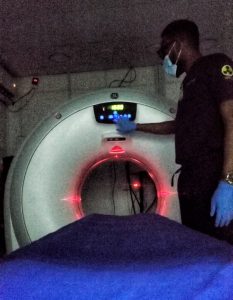
MM: Looking back now, would you have done anything differently?
I would have been more serious with my academics in my first two years, although it wasn’t totally my fault, but I have no regrets honestly.
MM: Knowing that Radiography is a relatively new and specialized course, what was the experience like with the faculty, your department and college staff, protocols and procedures?
My experience was a mixed one. I had excellent relationships with all my lecturers and other non-teaching staff at the college. I’m naturally likeable, so it is rare for me to have strained relationships with people. With protocols and procedures, I had some problems, most of which I can’t effectively explain in detail here. Some were at the university level, and some were at the departmental level. We had issues with some borrowed courses, wrong scores, delayed score uploads, course code changes (a university-wide issue), inadequate staffing, and inadequate infrastructure in our department as well.
MM: Are there any pros or cons when compared to studying with your counterparts in other departments?
I would say there are. However, as time goes by, the dynamics change as well. When I came into radiography, it was a ‘hot cake’ course. Radiographers in the country were few – as less than ten institutions in Nigeria were accredited to train radiographers. As a result, jobs were always available and in excess. Demand was high. Currently, about 50 universities train radiographers in Nigeria, so the narrative has changed. Also, it used to be much easier for radiographers to migrate for work. It is still easier when compared to other departments, but not as easy as it used to be. The pay is also slightly higher than some departments, but it all depends on various factors because it could also be lesser too when those factors don’t align for you. The physical demand of the role is a con too. Radiographers are always on their toes, lifting, moving and so on. The aesthetics of the profession can be considered a pro, to some factions.
MM: You mentioned that migration is much easier for radiographers to work when compared to other departments. Can you share available pathways and processes for this purpose?
Yes, definitely. To migrate to the UK, a Nigerian radiographer has to apply to the Health and Care Professions Council (HCPC) – this is the accreditation body of healthcare workers in the UK. An examination is usually not required but sufficient documentation has to be supplied to prove one’s competency. However, if there are loopholes in one’s competency, one might then be subjected to an examination. After verification, If the HCPC deems the radiographer’s application worthy, they are granted license to practice in the UK as a radiographer. Following which such radiographer can then apply for jobs.
For Canada, it’s a bit different as an examination is required – the Canadian Association of Medical Radiation Technologists (CAMRT) examination. After passing this examination, the radiographer can then be licensed to practice in Canada. Documentation is also required to be submitted before being eligible to write the examination. When all this is done, the radiographer can then proceed to apply for jobs in Canada.
Migration to the US is a bit impossible because to practice there, the radiographer needs to have graduated from a US accredited school to be eligible to take the US licensing examination – of which Nigerian institutions are not recognised for. There are also countries like Australia, Saudi Arabia, UAE with similar processes for migration.
The Radiographers Registration Board of Nigeria (RRBN) is the licencing body for Radiographers in Nigeria.
MM: Quite eye opening. So, what challenges would you say you passed through in school and how were you able to pull through them?
I think most students passed through the same challenges, but financial and academic challenges top my list. Financially, I don’t know exactly how, I think God just pulled through for me. Also, I’m a visual artist and was able to make money from art on the side. This really helped me. Academically, there was no short cut. You just have to read those books. But I read smart, looked at past trends and align myself to be prepared. I also had good relationships with those who had passed through the stage I wanted to enter and asked for guidance. I had solid friends too.
MM: Are there any platforms where you get to relate with other students and professionals from other courses, schools, states, or even internationally for learning purposes or opportunities?
Yes, there are. One of which is ISMRT – International Society of Medical Radiographers and Technologists. They hold regular webinars on relevant topics to the profession where various student and professional radiographers can discuss and exchange ideas. There are also online groups as well and other organisations, but this is the most comprehensive I know of.
MM: What would you say are the challenges and limitations of radiography in Nigeria today and possible solutions?
Structure. The profession and education of radiographers need a comprehensive restructuring to facilitate a lot of things. A good start would be the curriculum, to incorporate modern trends and remove redundancy. Radiography is a technologically inclined field. It’s curriculum needs to be constantly reviewed to make sure it is moving with the times. Currently, it is not. There are also professional regulations which I feel need to be put in place to keep the profession on a respectable pedestal. These would enable career growth, increase availability of jobs and foster equitable remuneration.
MM: With the advent of AI and other technological advancement, where do you see Radiography practice in Nigeria over the next 5-10 years?
In that timeline, I can’t say for sure. But there are a lot of research projects going on currently focusing on addressing the diagnostic gaps we face here. There is also research work being done to utilize AI to exponentially improve the diagnosis of cancer. Neuroimaging is also getting a lot of work being done in the domain of training AI to diagnose neurological diseases and disorders using biological tracers and also specialized MRI sequences. We can only hope that such innovations receive the government and private support they require.
MM: Now with the radiography degree, besides migration, what are the possible career paths and professional development route one can take?
So many. Asides the obvious clinical radiographer, sonographer, MRI tech, CT tech and Radiotherapist, one can advance to learn machine language models, AI engineering and revolutionize the current methods of practice in the profession. The less tech savvy camp can delve into healthcare management and seek to have their very own radiology outfit. There is also the option of research and education. Some radiographers eventually branch out into the biomedical engineering of the sophisticated equipment we work with. There are many more options, and they are all lucrative depending on how one approaches them.
MM: What would be your advice to anyone else interested in being the BGS or winning awards/prizes upon graduation?
Hmm. On being the BGS, I can’t advise because I wasn’t one myself. But on winning awards, I would say to aim for the very best for yourself without the awards in mind. Just prepare for every test and exam with the aim of scoring an A. The accolades will come as a by-product. Consistency is key too.
MM: Finally, any advice to students looking to study Radiography or already studying Radiography on their role and relation to the general healthcare sector?
If you are looking to study radiography, go for it only because it interests you, not because you have heard fancy things about it. A lot of people tend to sugar-coat radiography but it is not all roses. If you are currently studying it, please give your best. Try to know why things are done the way they are done, and do not just adopt things because that is what you were told. Be good outside the books too. Take your clinical placements seriously and learn as much as you can. Connect strategically with radiographers and always keep your ears down for opportunities.
MM: Thank you for having us and sharing these tips with us!
The pleasure was all mine.